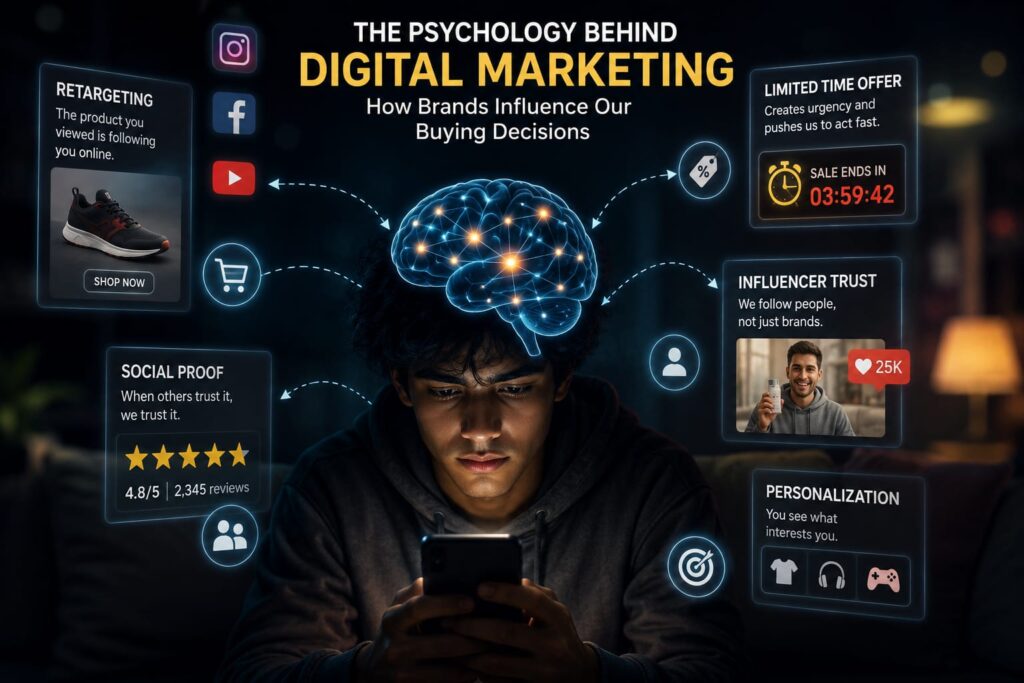
Have you ever wondered why your Instagram feed shows posts that match your interests? Or why YouTube keeps recommending videos similar to the ones you watched before? Many people think this is just a coincidence, but there is a powerful system working behind the scenes — algorithms.
Algorithms have become one of the most important parts of digital marketing. They help digital platforms understand what users like, what they search for, and what kind of content they are most likely to engage with.
What Exactly Is an Algorithm?
An algorithm is basically a set of rules or instructions used by digital platforms to decide what content to show to users. Platforms collect signals from user activity, such as likes, searches, clicks, watch time, and interactions.
For example, if you regularly watch videos about digital marketing, the platform may start showing you more content related to marketing, business, or social media.
This means that your online experience is often personalized based on your behavior.
How Do Algorithms Affect Digital Marketing?
For digital marketers, understanding algorithms is very important. When a business posts content on social media, the platform does not necessarily show that post to every follower.
Instead, the algorithm may decide who is most likely to be interested in the content. It can consider factors such as engagement, relevance, watch time, and user interaction.
This is why a post with fewer followers can sometimes reach thousands of people, while another post from a larger account may receive less attention.
Why Does Content Sometimes Go Viral?
Many people believe that viral content is simply based on luck. However, algorithms can play an important role.
When a piece of content receives strong engagement, such as likes, comments, shares, or long watch time, the platform may consider it valuable to users. As a result, the content can be shown to a larger audience.
This can create a cycle:
More Engagement → More Visibility → More People See the Content → More Engagement
However, going viral is never guaranteed. The quality of the content, timing, audience interest, and many other factors can also influence its performance.
Why Do Digital Marketers Care About Watch Time?
One interesting factor in digital marketing is watch time. If people watch a video for a longer period instead of scrolling away immediately, it can be a positive signal for the platform.
This is one reason why marketers focus on creating strong introductions or “hooks.” The first few seconds of a video can determine whether someone continues watching or moves to the next piece of content.
A good digital marketer therefore thinks not only about what content to create, but also about how to keep the audience interested.
Can Algorithms Change What We Buy?
Yes, algorithms can influence our purchasing journey. When platforms understand our interests, they can help businesses show us products that are more relevant to us.
For example, someone who frequently searches for fitness content may see advertisements for sports shoes, workout equipment, or fitness programs.
The algorithm is not necessarily making the person buy something. Instead, it is helping businesses show the right message to the right audience at the right time.
What Does This Mean for Digital Marketers?
Digital marketing is no longer just about posting advertisements. Marketers need to understand how people behave online and how platforms distribute content.
They need to create content that is useful, interesting, and relevant to their target audience. At the same time, they must keep learning because digital platforms regularly change how their algorithms work.
Algorithms are one of the hidden forces behind the digital world. They influence what we see, what content reaches us, and sometimes even which products we discover.
For users, algorithms create a more personalized online experience. For businesses, they provide an opportunity to reach the right audience more effectively.
The next time you scroll through Instagram, YouTube, or another digital platform, remember that the content you see may not be random. Behind your screen, algorithms are constantly working to understand your interests — and digital marketers are learning how to work with them.